
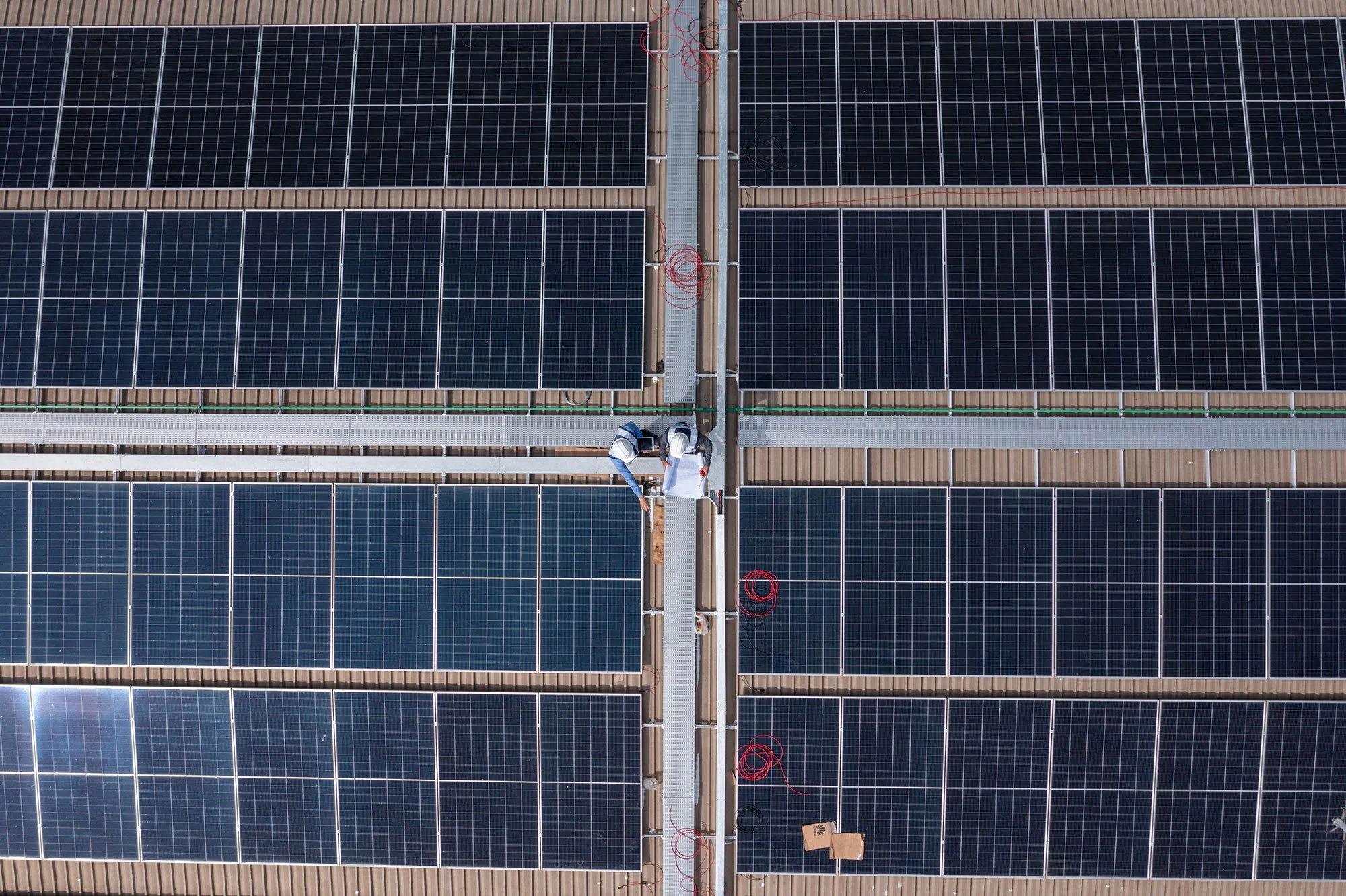
Commercial Roof-Mounted Solar Systems
Current Flow delivers professional roof-mounted solar installations that transform commercial buildings across the Midwest and Mid Atlantic into energy-generating assets. From office complexes in Chicago to manufacturing facilities in Pittsburgh, retail centers in Columbus to distribution warehouses in Baltimore, our team specializes in rooftop solar systems engineered for maximum efficiency and long-term reliability.
Commercial roof-mounted installations represent the most accessible pathway to solar adoption for businesses seeking immediate energy cost reductions without requiring additional land. Our rooftop systems maximize available space while integrating seamlessly with existing building infrastructure to provide decades of clean energy production.
Rooftop Solar Engineering Excellence
Commercial buildings offer ideal platforms for solar installations due to their substantial roof areas and high energy consumption patterns. Current Flow's rooftop systems are custom-designed to optimize energy generation while addressing the unique structural and operational requirements of each facility.
Flat Roof Installations
Warehouses, manufacturing plants, and distribution centers throughout Ohio, Indiana, Michigan, and Pennsylvania typically feature flat rooftops that provide excellent solar installation opportunities. Our ballasted mounting systems eliminate roof penetrations while distributing weight evenly across roof structures. These installations allow optimal panel positioning to maximize energy capture regardless of building orientation.
Sloped Roof Applications
Office buildings, retail facilities, and mixed-use developments across Illinois, Wisconsin, New York, and Maryland sometimes feature sloped roofing systems that require specialized mounting approaches. Current Flow utilizes rail and rail-less mounting systems designed specifically for different roof materials including standing seam metal, membrane systems, and built-up roofing.
Structural Assessment and Load Distribution
Every rooftop installation begins with comprehensive structural analysis to ensure safe load distribution and code compliance. Our engineering team evaluates roof capacity, wind load requirements, and seismic considerations specific to regional building standards throughout the Midwest and Mid Atlantic regions.
Installation Methods and Quality Standards
Current Flow employs proven installation methodologies that protect building integrity while ensuring optimal system performance. Our in-house installation crews utilize advanced mounting systems and weatherproofing techniques developed through decades of commercial rooftop experience.
Ballasted Mounting Systems
For flat roof applications, ballasted systems provide secure installation without roof penetrations. Concrete ballast blocks are strategically positioned to withstand wind uplift while maintaining proper drainage patterns. This approach minimizes installation time and eliminates potential leak points.
Penetrating Mount Systems
When ballasted systems are not feasible due to structural limitations, Current Flow employs professional-grade penetrating mounts with comprehensive waterproofing protocols. All penetrations are sealed using industrial-grade materials and techniques that exceed manufacturer warranties.
Code Compliance and Safety
Commercial rooftop installations must meet stringent electrical codes, fire safety requirements, and building standards. Our NABCEP-certified installers ensure compliance with National Electric Code requirements, local building codes, and utility interconnection standards across all jurisdictions.
Financial Benefits and Performance Optimization
Roof-mounted solar systems provide immediate energy cost reductions that improve building operating efficiency and tenant satisfaction. Most commercial rooftop installations achieve return on investment within 4 to 7 years through reduced electricity costs and available incentive programs.
Energy Independence and Cost Stability
Commercial buildings benefit from predictable energy costs that protect against utility rate increases. Rooftop solar systems generate power during peak demand periods when electricity costs are highest, providing maximum savings potential for office buildings and retail facilities.
Property Value Enhancement
Buildings with solar installations command higher lease rates and attract tenants seeking sustainable workspace solutions. LEED credits and green building certifications further enhance property marketability and long-term value.
Maintenance and Monitoring
Current Flow provides comprehensive maintenance programs including system monitoring, performance analysis, and preventive maintenance services. Our ongoing support ensures optimal system performance throughout the 25+ year equipment lifecycle.
Ready to transform your commercial building into an energy-generating asset? Contact Current Flow today to schedule a rooftop assessment and discover how professional solar installation can reduce operating costs while enhancing building value.
Commercial Roof-Mounted Solar Systems FAQs
How do you ensure that roof-mounted solar installation won't void my building's roof warranty?
Current Flow coordinates directly with roofing manufacturers and building warranty providers throughout the installation process to maintain existing warranties. Our NABCEP-certified installers follow manufacturer-approved installation procedures and use industry-standard waterproofing techniques that meet or exceed warranty requirements. When penetrating mount systems are necessary, we utilize professional-grade sealing materials and methods that roofing manufacturers recognize as acceptable practices. We can also work with your certified roofer to ensure all penetrations are properly sealed and documented for warranty compliance.
What is the weight capacity requirement for commercial roof-mounted solar systems?
Most commercial solar installations add approximately 2-5 pounds per square foot to roof loading, which is within the capacity of most commercial buildings. Current Flow Solar conducts comprehensive structural assessments using building as-built drawings and engineering specifications to verify load capacity before installation. Our team includes licensed engineers who calculate live loads, dead loads, and wind uplift forces to ensure your building can safely support the solar system throughout its 25+ year lifespan. For buildings with limited structural capacity, we design ballasted systems that distribute weight evenly across the roof structure.
Can solar panels be installed on older commercial roofs, and what age limitations apply?
Commercial roofs should have at least 15-20 years of remaining useful life before solar installation to justify the long-term investment. Current Flow evaluates roof condition, membrane integrity, and structural adequacy as part of our site assessment process. If roof replacement is needed within the next few years, we recommend coordinating solar installation with roof replacement to maximize both investments. Our team works with commercial roofing contractors to integrate solar mounting systems during roof replacement projects, often resulting in better warranties and improved system performance.
How do you handle rooftop equipment and structural obstacles during solar installation?
Current Flow specializes in designing around existing rooftop equipment including HVAC units, exhaust fans, satellite dishes, and electrical equipment. Our engineering team creates custom layouts that avoid shading issues while maintaining required clearances for equipment access and maintenance. We coordinate with building engineers and equipment manufacturers to ensure solar installations don't interfere with existing systems or violate service access requirements. Our designs also account for future equipment replacement and expansion needs to prevent conflicts with the solar system.
What mounting options are available for different commercial roof types, and which is most reliable?
Current Flow offers ballasted mounting systems for flat roofs, penetrating mounts for sloped roofs, and specialized clamp systems for standing seam metal roofs. Ballasted systems are often preferred for flat commercial roofs because they eliminate penetrations and distribute weight evenly, reducing installation time and potential leak points. For sloped roofs, we use rail-based penetrating systems with comprehensive flashing and weatherproofing. Our in-house installation teams are experienced with all mounting types and select the optimal system based on roof material, structural capacity, and long-term performance requirements. All mounting systems are engineered to withstand regional wind loads and weather conditions specific to Midwest and Mid Atlantic locations.